
Blog
Last Updated: October 30, 2026
The five best protective coatings for coastal structural steel are hot-dip galvanizing, a duplex zinc-epoxy-polyurethane system, marine-grade epoxy, zinc-rich primers, and powder coating. Hot-dip galvanizing ranks first because its sacrificial zinc layer protects steel in chloride-heavy air, and the right choice depends on how severe the site's exposure is.
Coastal structural steel faces a corrosion problem that inland steel rarely sees. Salt-laden air settles on every surface, moisture stays on steel longer, and chloride ions break down unprotected metal far faster than most owners expect. Choosing the right protective coating is the single most important decision for steel that will stand outdoors near the water. Choosing the right coating shapes how long coastal steel lasts.
Steel corrodes when oxygen, moisture, and an electrolyte meet on its surface. Coastal air supplies the electrolyte. Wind lifts fine salt particles from breaking waves and carries them inland, where they settle on steel and absorb humidity, forming a conductive chloride film.
The result is that coastal steel can corrode several times faster than identical steel inland, and the rate is not uniform across a single site.
Coastal exposure is not one condition, it is a spectrum. Most coating specifications and product data sheets reference recognized corrosivity categories (the ISO 9223 system is the common reference, ranging from C1 very low to CX extreme). Coastal structural steel typically falls in the C4 to CX range depending on siting, and getting the category wrong is the most common specification error we see. A practical way to think about it:
What drives severity in practice. Four variables matter most: distance from the shoreline and prevailing wind direction; height above grade and splash exposure; whether the surface stays wet (pooling water, poor drainage, sheltered from sun and wind); and local salt deposition, which can be measured with chloride deposition plates or estimated from nearby exposure data. A structure on an open pier facing the prevailing onshore wind is a different problem from the same structure set back behind a seawall.
Watch Out Specifying "outdoor steel" without naming the coastal exposure category is the most common mistake we see. The coating that suits a sheltered inland-adjacent frame can fail within a few years on a splash-zone structure. Name the exposure category, the surface preparation standard, and the recoat window in the specification so the fabricator and the coating applicator build to the same target.
Why this matters for the ranking below. The five systems that follow are ranked for general coastal structural steel, but the right choice shifts with exposure severity. Galvanizing and duplex systems are commonly specified in the most aggressive categories; epoxy and powder coating can be adequate in sheltered or inland-adjacent settings when applied to a high standard. Treat the ranking as a starting point and match it to your site's actual exposure.
We ranked these systems against four practical criteria: corrosion resistance in chloride-heavy air, adhesion and tolerance of imperfect surface preparation, expected service life before maintenance, and total cost of ownership over the life of the structure. Initial cost matters, but a cheaper coating that needs recoating in a few years often costs more overall.
Real performance depends heavily on exposure severity, surface preparation quality and how the coating is applied, so treat the order as a starting point for a specification discussion.
| Rank | Coating System | Corrosion Resistance (Coastal) | Surface Prep Tolerance | Best For |
|---|---|---|---|---|
| 1 | Hot-dip galvanizing | Very high | Moderate | Long-term, low-maintenance steel |
| 2 | Duplex system (zinc primer, epoxy, polyurethane) | High | Low to moderate | Heavily exposed frames needing a finished look |
| 3 | Marine-grade epoxy | High | Moderate | Structures needing a strong barrier layer |
| 4 | Zinc-rich primer and inorganic zinc | High | Low | Multi-coat systems and field touch-up |
| 5 | Powder coating | Moderate | Moderate | Indoor-adjacent or sheltered outdoor steel |

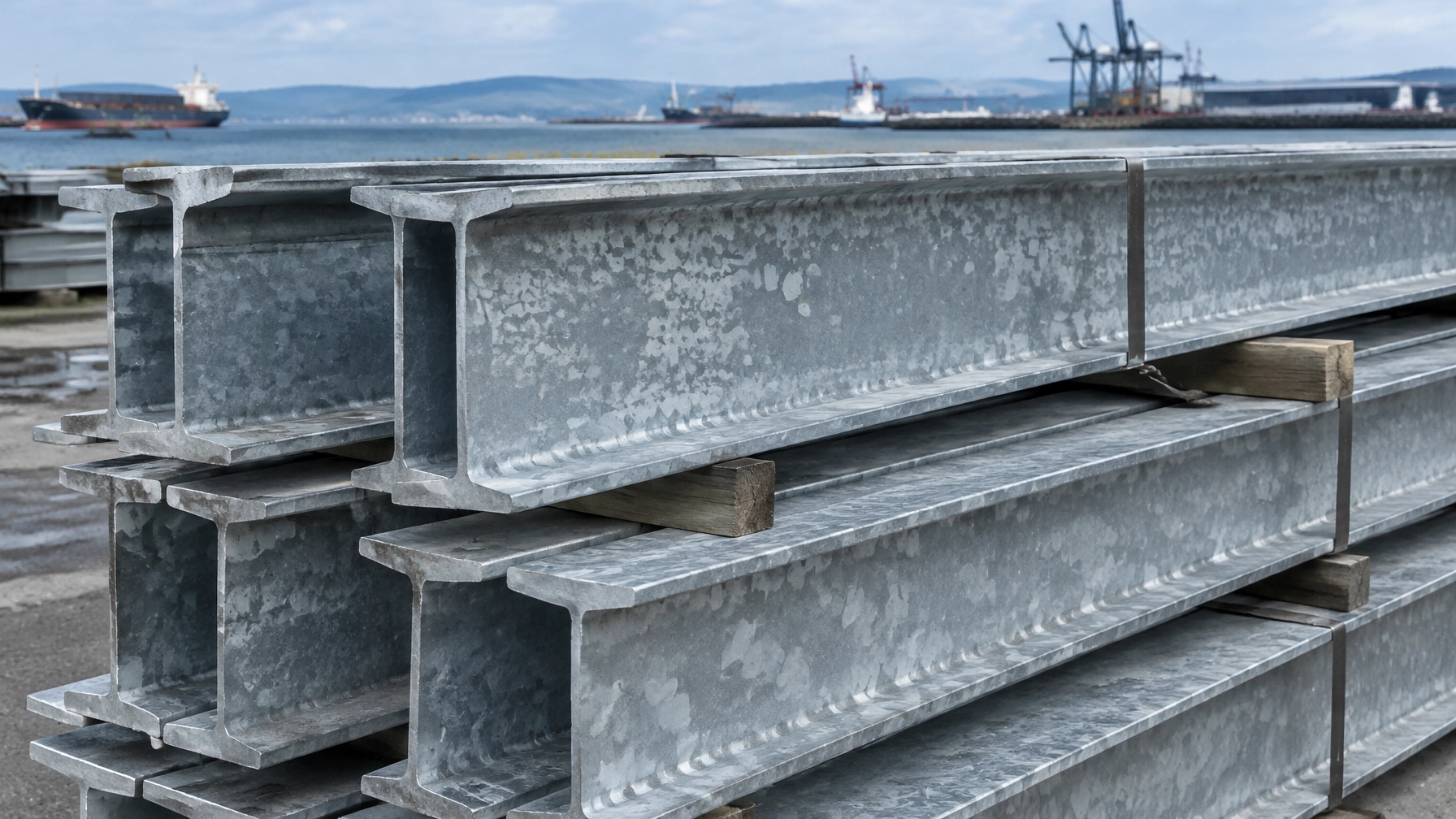
Hot-dip galvanizing dips fabricated steel into molten zinc, creating a metallurgically bonded coating. Galvanizing is typically applied to fabricated pieces, so you can also review the structural steel services offered for projects that need galvanized components. Zinc corrodes sacrificially, so it protects the steel underneath even where the coating is scratched. For coastal structural steel, that sacrificial protection is a major advantage.
Pros:
Cons:
A duplex system layers a zinc-rich primer, an epoxy intermediate coat and a polyurethane topcoat. Because each layer must bond properly, it helps to understand the welding methods that affect how coatings adhere to fabricated steel. Each layer does a different job. The zinc primer offers sacrificial protection, the epoxy adds a dense barrier, and the polyurethane resists UV and weathering while providing color retention.
Pros:
Cons:
Marine-grade epoxy forms a dense, chemically resistant barrier against moisture and salt. For coastal projects in the Coronado area, you can explore custom structural steel and fabrication from a local fabricator. It is widely specified for steel near water and for submerged or splash-zone work. Its strength lies in blocking chloride penetration rather than relying on sacrificial zinc.
Pros:
Cons:
Zinc-rich primers contain high zinc loads that protect steel sacrificially, and inorganic zinc coatings offer exceptional durability in severe environments. When comparing fabrication partners who apply these coatings, see what to consider before hiring metal fabrication experts. They are often the first layer in a multi-coat system, and they suit field touch-up well.
Pros:
Cons:

Powder coating applies dry polymer powder electrostatically, then cures it with heat. It produces a durable, uniform finish and is available in many colors. In coastal settings, its performance depends heavily on whether the steel is sheltered and how well the pre-treatment was done.
Pros:
Cons:

Most premature coating failures on coastal structural steel trace back to surface preparation, not the product.
Start with salt testing, not blasting. Chlorides cling to steel and are not always visible.
Match the surface profile to the coating. Abrasive blasting is the default for structural steel in coastal service.
Plan for field touch-up before the steel leaves the shop. Galvanized and shop-coated steel still gets damaged in transit and erection.
Pro Tip Write the preparation standard, the target surface profile, the salt-test requirement, and the stripe-coat requirement into the coating specification. When those four items are explicit, the fabricator and the coating applicator build to the same target instead of guessing.
Common failure modes to design against. Underfilm corrosion spreads from a break in the coating; edge and weld breakdown starts where film thickness is lowest; and chalking or UV degradation of an un-topcoated epoxy exposes the barrier layer to sunlight. Each of these is a preparation or detailing problem as much as a product problem, which is why the best coating system in the world underperforms on poorly prepared steel.
Specifying "outdoor steel" without naming the coastal exposure is the most common mistake we see. Write the exposure category, the surface preparation standard and the recoat window into the specification so the fabricator and coating applicator build to the same target.
No single coating wins every case. Galvanizing suits owners who want the least future maintenance, while a duplex system suits designs that need a specific color or finish. Marine-grade epoxy and zinc-rich systems fit projects that need flexibility in the field. Discuss your exposure, budget and maintenance plans with a fabricator before you finalize the specification. You can request a quote to discuss custom steel fabrication for your project.
For most coastal structural steel, a duplex system is the strongest general choice: a zinc-rich primer for sacrificial protection, an epoxy intermediate coat for barrier protection, and a polyurethane topcoat for UV and chemical resistance. Hot-dip galvanizing is the other strong option when the steel can be dipped in a galvanizing bath and the piece fits the kettle. The right pick depends on exposure severity, fabrication schedule and maintenance access, so confirm the specification with your engineer and coating supplier before ordering.
Yes. Hot-dip galvanizing bonds a zinc layer metallurgically to the steel, and that zinc corrodes sacrificially to protect the base metal even where the coating is scratched. It performs well in chloride-rich air, but salt deposition still accelerates zinc consumption, so the expected service life is shorter in splash zones than inland. Galvanized steel can also be topcoated to extend life further. Confirm the zinc thickness and galvanizing specification for your exposure category before fabrication.
A duplex coating system combines two layers of protection, typically a metallic primer such as zinc-rich paint or hot-dip galvanizing, followed by one or more organic topcoats such as epoxy and polyurethane. The metallic layer protects through galvanic action, while the organic layers act as a barrier and add color and UV resistance. Because the two layers work together, duplex systems usually last longer than either coating alone when properly applied over prepared steel.
Preparation should remove mill scale, rust, oil, salt and dust. Abrasive blasting to a recognized cleanliness standard, such as SSPC-SP 10 near-white metal, is common for coastal work. Chloride contamination should be tested and removed, since residual salt can cause early coating failure. Surface profile must match the primer manufacturer's requirement, and coatings should be applied within the recommended window before flash rusting occurs. Careful preparation usually matters more to coating life than the choice of product.
Call Us
(619) 241-2413E-mail Us
info@antoniosmetalworks.com


